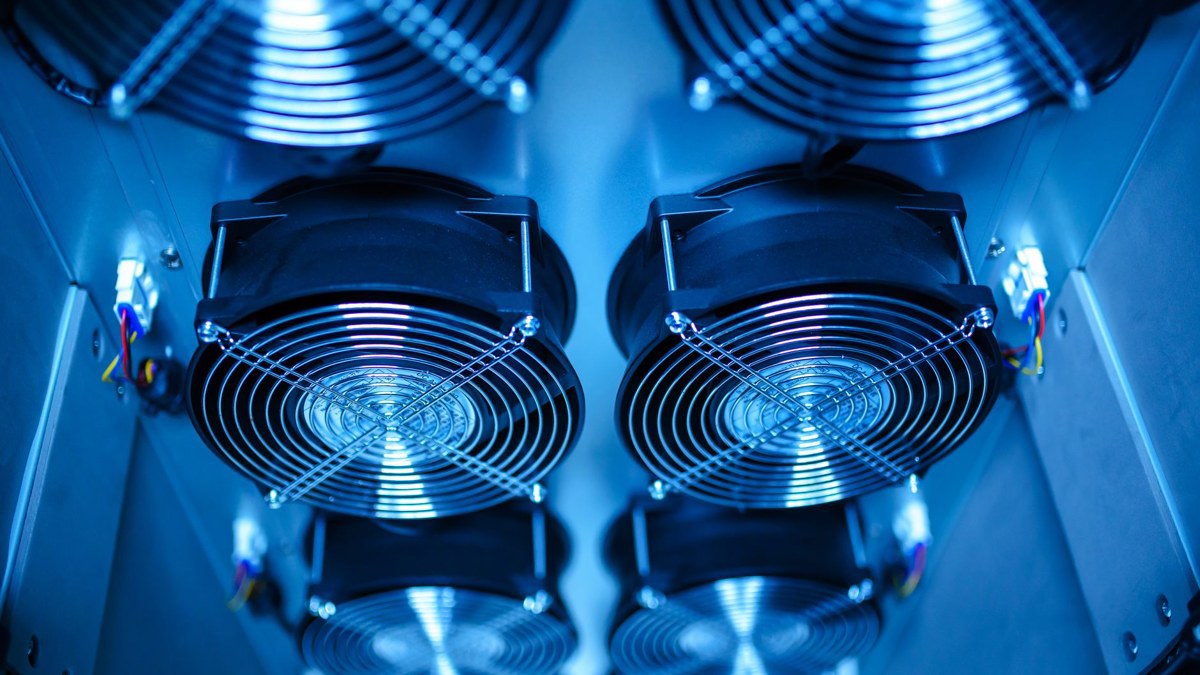
Meta details closed-loop liquid cooling for denser AI data centers
Meta says its closed-loop liquid cooling recirculates coolant for AI data centers and cut fan energy 20% in a pilot.


Meta published new details on August 27 about how it is cooling AI data center hardware as GPU racks become harder to manage with air alone. The company says many of its newest AI-optimized facilities now use closed-loop liquid cooling, which sends a water and glycol coolant through server hardware, moves the heat through exchangers, and recirculates the same fluid instead of expelling it from the site.
What changed
The useful part of Meta's post is not that liquid cooling exists. It is the operational detail around why the company sees it as a practical requirement for dense AI hardware. Meta says older AI racks, including racks with 16 Nvidia H100 GPUs at its Altoona, Iowa data center, could still be cooled with air and minimal water use. Newer AI hardware designs have pushed the company toward direct-to-chip cooling because adding enough air-cooling hardware can enlarge the server tray while leaving compute capacity unchanged.
Meta says the coolant loop can run for up to a decade before replacement. It also says a typical AI-optimized data center using closed-loop liquid cooling with dry coolers uses less water annually than a couple of full-service restaurants. That claim is Meta's comparison, but it gives readers a concrete way to separate closed-loop designs from broader concerns about data center water demand.
Why it matters
AI infrastructure debates often focus on chips, power contracts, and model training cost. Cooling deserves the same attention because it sets limits on rack density, facility design, water strategy, and where operators can place new capacity. If liquid cooling lets a facility fit more GPUs into the same footprint, the constraint shifts from floor space toward power delivery, heat rejection, maintenance skill, and supply chains for cooling plates, pumps, fluids, and exchangers.
The other notable detail is Meta's use of reinforcement learning for cooling operations. The company says its engineers built a physics-based data center simulator that models weather, server load, and cooling equipment behavior before applying decisions to live facilities. In a pilot, Meta says the approach reduced energy consumed by air cooling supply fans by an average of 20% and reduced water usage by 4% across different weather conditions.
What to watch
For enterprise buyers and communities watching AI data center expansion, the practical question is whether operators disclose enough design detail to make water and energy claims comparable. A closed-loop system can reduce ongoing water use, but it does not erase the need to evaluate power sourcing, heat rejection, local climate, and maintenance risk. Meta's post points to a future where AI capacity is judged not only by accelerator counts, but by the engineering around the rack.
Sources
Cover photo by panumas nikhomkhai on Pexels, used under the Pexels License.

Comments (0)
Leave a Comment