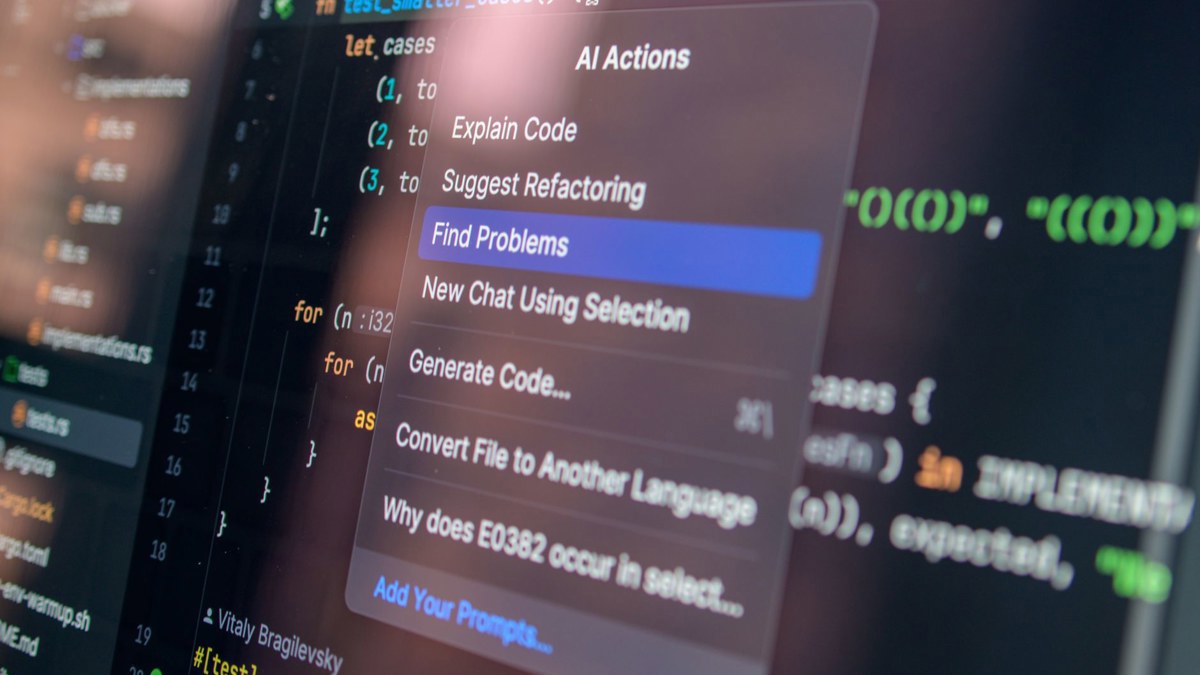
Meta releases Muse Glimmer as an open-weight 30B model for local AI agents
Meta released Muse Glimmer, a 30B Apache-licensed open-weight model designed to run local AI agents on consumer hardware.


Meta has released Muse Glimmer, a 30-billion-parameter open-weight AI model aimed at developers who want agentic systems to run on consumer hardware instead of relying only on cloud-hosted frontier models. The company said on August 10 that the model weights are being published under the Apache 2.0 license and are available through Hugging Face.
The announcement matters because Meta is positioning Glimmer around local agents: software that can reason across multiple steps, call tools, recover from failed actions, and work with private context on a user's own device. Meta says the model is small enough for a Mac or a PC with a single consumer GPU, helped by quantization that compresses the language model to under 20 GB for a 24 GB or 32 GB hardware envelope.
Why it matters
Most high-capability AI assistants still run in remote data centers, where latency, connectivity, data handling, and provider control shape what developers can build. A capable open-weight model for local workflows gives developers another route for coding agents, document analysis, personal automation, and offline tools, even if the best cloud systems remain ahead on broad frontier benchmarks.
Meta describes Muse Glimmer as distilled from the larger Muse Spark model. The training process included pre-training on Muse Spark outputs, mid-training with longer-context and agent-heavy data, and post-training across reasoning, coding, general assistance, and agentic domains. The model card lists support for text and image input with text output, a dedicated perception encoder, a 131,072-token-plus context length, and more than 100 training languages.
Independent confirmation from the Associated Press framed the release as part of Mark Zuckerberg's renewed push for open AI, including his argument that control over advanced systems should not be concentrated among a few companies, governments, or institutions. AP also reported that Meta plans to provide developer access to Muse Spark 1.2, a more powerful model in the same family.
There are still practical limits. Meta's performance claims are based on its own evaluations, and local deployment will depend heavily on memory, GPU support, quantization quality, and the surrounding agent scaffold. But the release gives the open-model ecosystem a fresh, permissively licensed entrant focused less on chatbot demos and more on running useful agents close to the user's data.
Sources
Cover photo by Daniil Komov on Pexels, used under the Pexels License.




Comments (0)
Leave a Comment