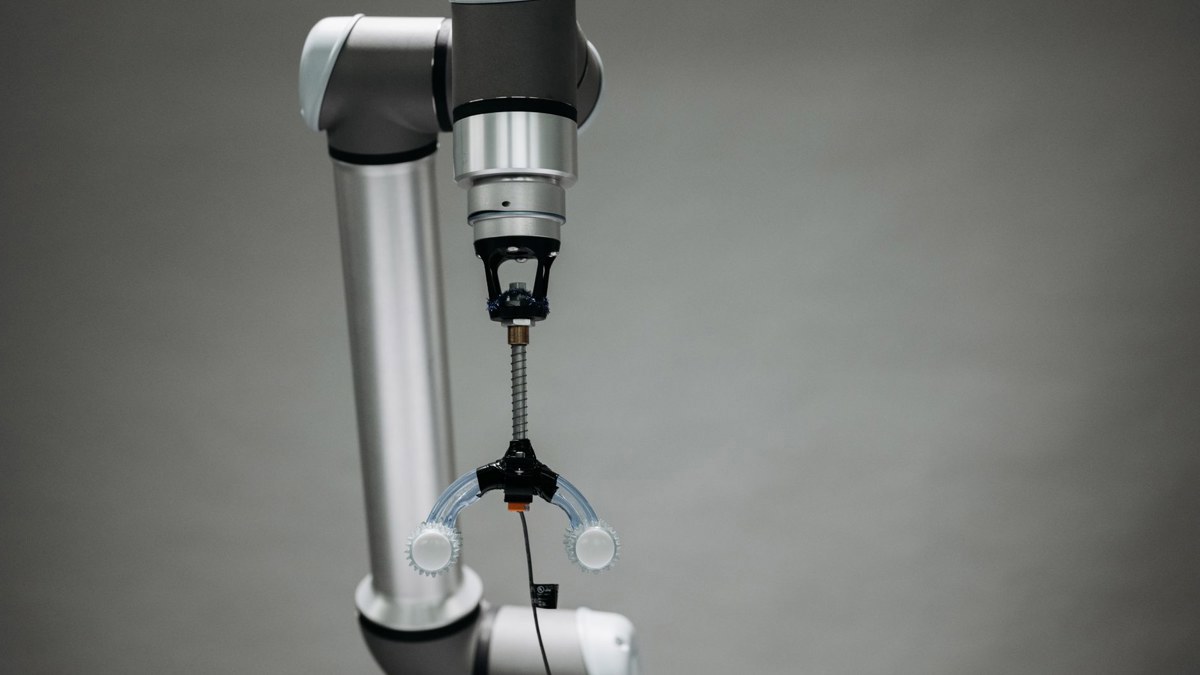
NVIDIA open sources GPU-accelerated medical physics simulation framework
NVIDIA released an open source GPU-accelerated framework for medical robotics simulation in Isaac for Healthcare.


NVIDIA has released an open source Medical Physics Simulation framework inside Isaac for Healthcare, aiming to give medical robotics teams a reusable way to test device behavior against virtual anatomy before moving deeper into physical prototyping.
The July 22 announcement frames the tool as a response to a persistent bottleneck in healthcare robotics: the need for varied, difficult-to-capture training and evaluation data. Medical devices can bend, slip, press into soft tissue, encounter unusual anatomy, or face noisy imaging conditions. Those edge cases are exactly where developers need evidence, but they are expensive and slow to gather only through lab work or clinical data collection.
What NVIDIA is releasing
The framework combines classical physics simulation, sensor simulation, robot learning tools, and generative physics simulation. NVIDIA says it can model anatomy-device contact, friction, motion, simulated X-ray inputs, and reinforcement-learning environments for workflows such as catheter and guidewire navigation through vascular anatomy. The public documentation describes available simulators including an endoluminal solver for catheter and guidewire dynamics, Cosmos-H-Dreams for generative device-anatomy dynamics, and a surgical robotic generative physics simulator.
Because the framework is open source, developers can inspect the implementation and adapt it to specific devices or workflows. That matters in medical technology because teams often need reproducible evidence, transparent model behavior, and clear limits before simulation results can support product development or regulatory work.
Why it matters
NVIDIA says GPU-native simulation can run many environments in parallel, allowing teams to explore failures earlier and train robot policies faster than with one-off custom scenes. The company cites benchmark results showing 8,192 robot-training environments running in parallel and cutting one training workload from more than five hours to under two minutes.
The ecosystem signal is also notable. NVIDIA says CMR Surgical and Cambridge Consultants are using Cosmos-H-Dreams for soft-tissue surgical procedures, while CMR has contributed nearly 500 hours of anonymized clinical data from its Versius Surgical Robotic System to the Open-H Embodiment dataset. Johnson & Johnson MedTech, XCath, Inner Logic, and Medtronic Structural Heart are also listed as organizations applying or exploring the simulation stack for tasks such as digital twins, endovascular autonomy, synthetic data, and catheter-navigation research.
The release does not mean simulated testing can replace clinical validation. Its practical promise is narrower: giving robotics teams a common, accelerated layer for early design, failure discovery, policy training, and evidence generation before they commit scarce hardware and clinical resources.
Sources
Cover photo by Pavel Danilyuk on Pexels, used under the Pexels License.



Comments (0)
Leave a Comment