
Inkling 2 Mini Offers Strong Local Agentic Coding Performance in a 20 GB Package
Inkling 2 Mini, a 26.4B open-weights looped MoE model released Nov 20, delivers leading agentic coding scores among sub-100B open models while running locally.


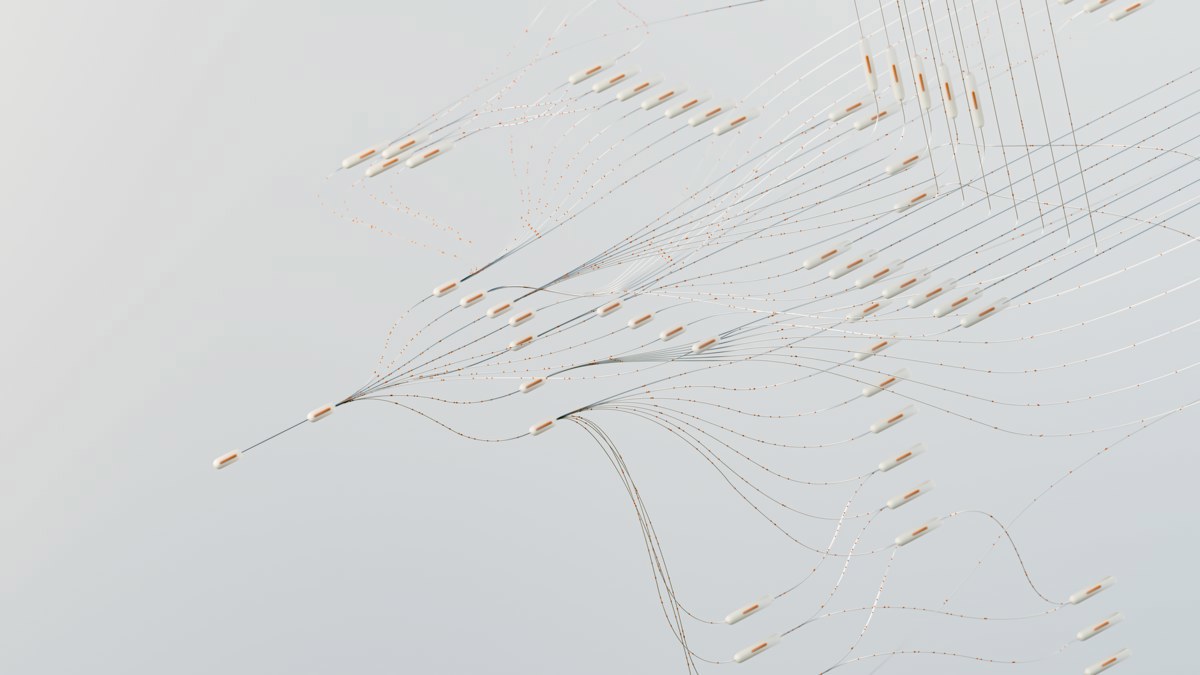
Thinking Machines Lab released Inkling 2 Mini on November 20, 2026, an open-weights multimodal model designed explicitly for local runs on consumer hardware. The model uses a looped transformer architecture in which the middle 12 of its 24 layers repeat three times per token. This design increases serial reasoning depth without a proportional increase in stored parameters.
Architecture and footprint
Inkling 2 Mini contains 26.4 billion total parameters with 3.4 billion active per token. Including the looping effect, it performs the equivalent of 48 layer visits while keeping the checkpoint size near 20 GB in mixed NVFP4 and MXFP8 precision. Official documentation states it runs on a MacBook Pro with 48 GB unified memory and has been demonstrated offline during a flight. The Apache 2.0 license includes a Model Acceptable Use Policy.
Benchmark comparisons
On agentic coding benchmarks the model leads other open-weights systems under 100 billion total parameters. It scores 48.2 % on DeepSWE v1.1 and 46.5 % on Vals Index v2.2 according to the release materials and third-party coverage. It performs competitively with Qwen3.8-27B on several tool-use and knowledge-work suites that incorporate search, while trailing on factuality-only measures such as AA-Omniscience. The looped design improves long-horizon reasoning and monitorability of chain-of-thought compared with non-looped equivalents of similar size.
Practical considerations for local deployment
Users who need persistent local agents for coding, tool calling, and multi-step workflows without recurring cloud costs or data transmission will find the most direct value. The model ships with day-zero support in Transformers, llama.cpp, MLX, and SGLang, plus a speculative drafter for additional speed. Independent efficiency measurements cited in the announcement place it ahead of several comparable models on intelligence per watt when run on NVIDIA DGX Spark hardware.
Limitations remain visible in the reported numbers. Inkling 2 Mini scores behind Qwen3.8-27B on MultiChallenge and ComplexConstraints benchmarks that emphasize multi-turn instructions or many simultaneous constraints. Knowledge-intensive tasks without tool access show scores consistent with other models of similar total parameter count rather than the larger Inkling 2 Small sibling.
Decision lens
Compared with closed frontier models, the release trades peak capability for immediate local execution, full weight access, and zero per-token inference cost after download. Compared with other open 20–30 B parameter models, the looping technique and strong agentic benchmark results differentiate it for developers who already run local inference stacks and value offline operation or data privacy. Organizations requiring the highest factuality or the broadest multi-turn conversational robustness may still prefer larger or differently tuned alternatives.
Sources
Cover photo by Artem Podrez on Pexels, used under the Pexels License.
What supports the decision
Pros
- Leads open-weights models under 100B total parameters on DeepSWE v1.1 (48.2%) and several agentic/tool-use benchmarks
- Runs on consumer laptops (~20 GB footprint) with official support for Transformers, MLX, llama.cpp and SGLang
- Apache 2.0 license with open weights released on day one
- Looping architecture improves serial reasoning depth and chain-of-thought monitorability
- High reported intelligence-per-watt efficiency on compatible hardware
Cons
- Trails Qwen3.8-27B on MultiChallenge and ComplexConstraints benchmarks emphasizing multi-turn or heavily constrained instructions
- Factuality scores align with other models of similar total parameter count rather than larger siblings
- Best results on knowledge work require integrated search or tools rather than standalone recall
Key Specs
Was this worth your time?
One tap, no account. Your response helps decide what deserves a follow-up.

Comments (0)
Leave a Comment