IBM agrees to buy HRL Laboratories to broaden its quantum hardware roadmap
IBM agreed to acquire HRL Laboratories, adding silicon-spin qubit and quantum sensing expertise to its quantum roadmap.


IBM has signed a definitive agreement to acquire HRL Laboratories, a long-running research and development lab jointly owned by Boeing and General Motors, in a move aimed at expanding IBM's quantum computing program beyond its core superconducting-qubit work.
The company said the deal would bring HRL's silicon-spin qubit engineering, quantum sensing, cryogenics, control electronics, packaging, and materials research into IBM Research. IBM did not disclose financial terms. The transaction still needs customary closing conditions and regulatory approvals, and IBM said it expects the deal to close by the end of the third quarter of 2026.
Why the acquisition matters
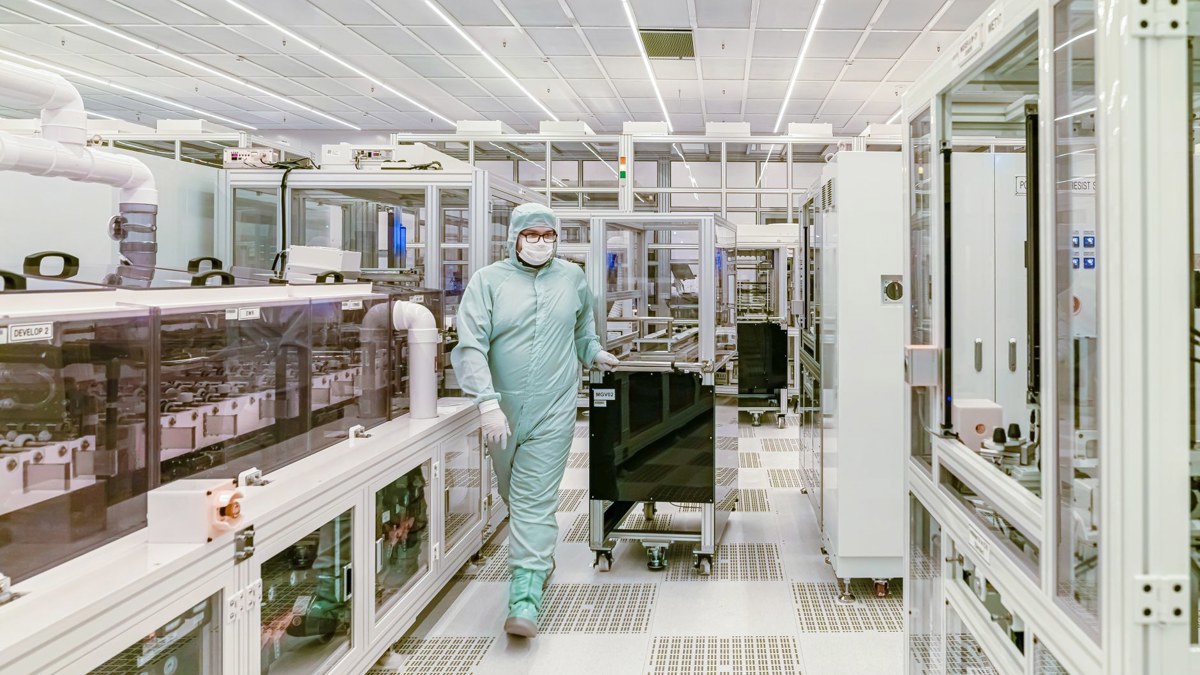
IBM has been one of the most visible backers of superconducting quantum processors, but the HRL deal signals that it wants a deeper bench of hardware approaches as the industry works toward fault-tolerant systems. Silicon-spin qubits are attractive because they rely on advanced silicon fabrication techniques, a manufacturing foundation that overlaps with other semiconductor processes. IBM said that overlap is one reason both spin qubits and superconducting qubits remain credible paths for scaling quantum technologies.
For IBM, HRL also adds capabilities outside the qubit itself. Quantum computers need tightly integrated support systems, including low-temperature hardware, control electronics, interconnects, and packaging that can preserve fragile quantum states while systems grow. IBM said HRL's work in those areas could support its long-term plans for quantum computing, quantum networking, and quantum sensing.
A second track for quantum scale-up
The acquisition comes as IBM continues to promote an ambitious quantum roadmap. In its announcement, the company pointed to IBM Quantum Starling, planned for 2029, and a later Blue Jay system in the mid-2030s. Those targets remain IBM's projections, not independently demonstrated commercial systems, but they show why the company is trying to secure more hardware expertise now.
HRL's background may also connect with IBM's broader manufacturing strategy. IBM said in May that it would establish Anderon as a standalone quantum wafer foundry with support from the U.S. Department of Commerce. Adding HRL could give IBM another route to explore spin-qubit manufacturing and faster hardware learning cycles, while Boeing and GM are expected to remain partners on quantum applications and advanced technology development after the transaction closes.
Sources
Cover photo by Ludovic Delot on Pexels, used under the Pexels License.


Comments (0)
Leave a Comment