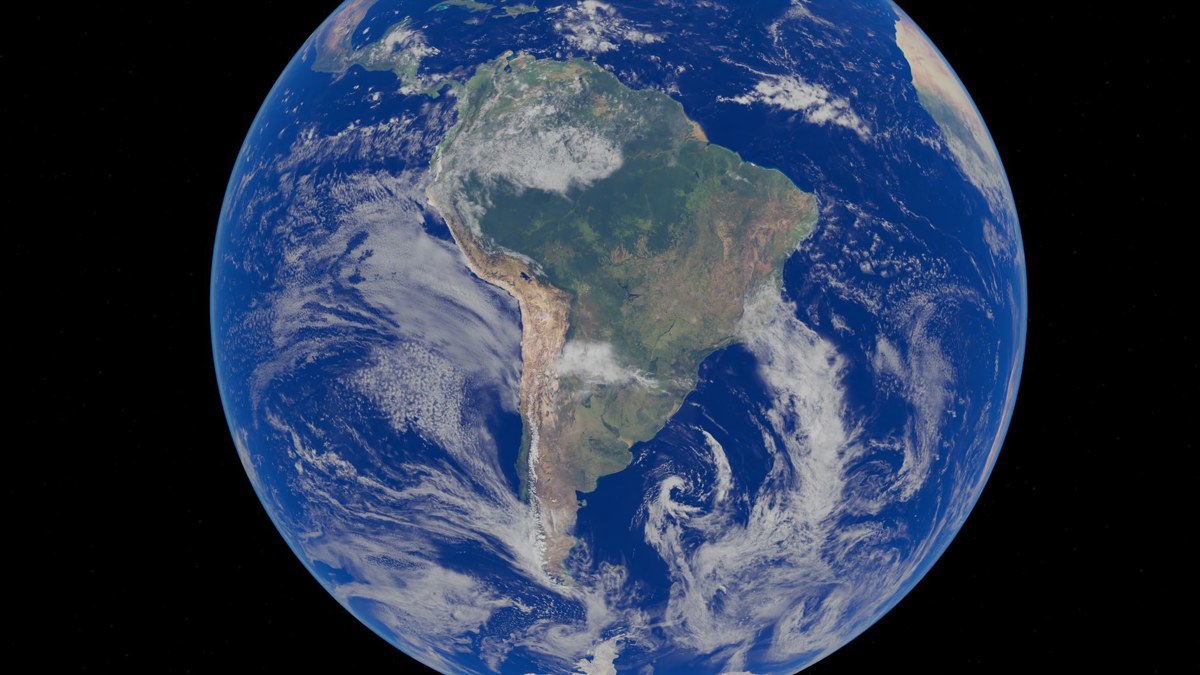
NVIDIA Earth-2 data assimilation review: useful weather AI for teams with sensors and GPUs
Review of NVIDIA Earth-2 data assimilation tools for weather AI, weighing sensor-driven forecasts against GPU and validation demands.


NVIDIA's September 21 Earth-2 update is best understood as a practical developer review of AI weather forecasting rather than a consumer product launch. The new tutorial shows how Earth2Studio can fold fresh observations into AI weather models through score-based data assimilation for regional forecasts and HealDA-style global state estimation. That matters because many weather-sensitive teams already collect local measurements, but their operational forecasts often wait for slower numerical analyses or broad public datasets.
What stands out
The strongest argument for Earth-2 is control. NVIDIA says the workflow can use proprietary or third-party observations to keep estimates closer to current conditions and to focus forecasts around assets such as wind farms, logistics corridors, event venues, or agricultural regions. Earth2Studio also looks like the right shell for this job: its documentation describes a Python package that separates data sources, models, IO, and workflows, with connectors for NOAA, ECMWF, NASA, EUMETSAT, Copernicus CDS, AWS Open Data, and others.
The update is most convincing when NVIDIA gives measured examples instead of general AI-weather language. In one CorrDiff-COSMO downscaling example over the Netherlands and northwestern Germany, NVIDIA reports a 54% wind-speed RMSE reduction at held-out stations after assimilating GHCN-Hourly observations. In a StormCast-CONUS example, it reports an average 7.2% wind-speed RMSE reduction across six forecast steps. Those are vendor-reported tutorial results, not independent production benchmarks, but they show the feature is more than a diagram.
Where it is limited
This is not a plug-and-play weather app. NVIDIA lists an NVIDIA RTX PRO or data center GPU, a development environment with Earth2Studio installed, Python knowledge, and about 30 minutes for the tutorial. The practical buyer is a research, energy, insurance, logistics, agriculture, or climate-risk team that already has data pipelines and can validate forecast value against its own decisions. Smaller organizations that only need a dashboard should probably buy a finished forecasting service instead.
The other caveat is evidence scope. The SDA paper behind the regional technique is encouraging, with an arXiv abstract reporting 10% lower RMSE on left-out stations in a sparse-station test and noting lingering ensemble-dispersion issues. HealDA is similarly promising but still framed as a research system that trails operational references by less than one day of effective lead time in reported experiments. That is impressive for AI data assimilation, yet it is not the same as proven superiority across all regions, seasons, hazards, or business cases.
Verdict
Compared with waiting on conventional numerical analyses or using a generic AI forecast model unchanged, Earth-2's new data-assimilation path gives advanced teams a sharper way to turn owned observations into operational weather intelligence. Compared with a managed weather product, it demands far more infrastructure and validation discipline. The best use case is a technically mature organization with high-value local observations and enough GPU capacity to test whether better nowcasts or regional forecasts change decisions. The wrong use case is a team looking for guaranteed forecast accuracy, turnkey procurement, or independent benchmark proof on day one.
Sources
Cover photo by Zelch Csaba on Pexels, used under the Pexels License.
What supports the decision
Pros
- Turns proprietary and third-party observations into more current regional weather estimates.
- Earth2Studio offers a modular Python surface for models, data sources, IO, and workflows.
- Vendor examples report meaningful wind-speed RMSE reductions in CorrDiff and StormCast workflows.
- Research backing covers both sparse regional observations and global HealDA-style initialization.
Cons
- Requires NVIDIA RTX PRO or data center GPU resources and Python weather-modeling skill.
- Reported gains are vendor tutorial results and research findings, not independent production benchmarks.
- Value depends heavily on sensor quality, geography, observation density, and validation discipline.
- Not suitable for teams that want a managed dashboard instead of an engineering workflow.
Key Specs



Comments (0)
Leave a Comment