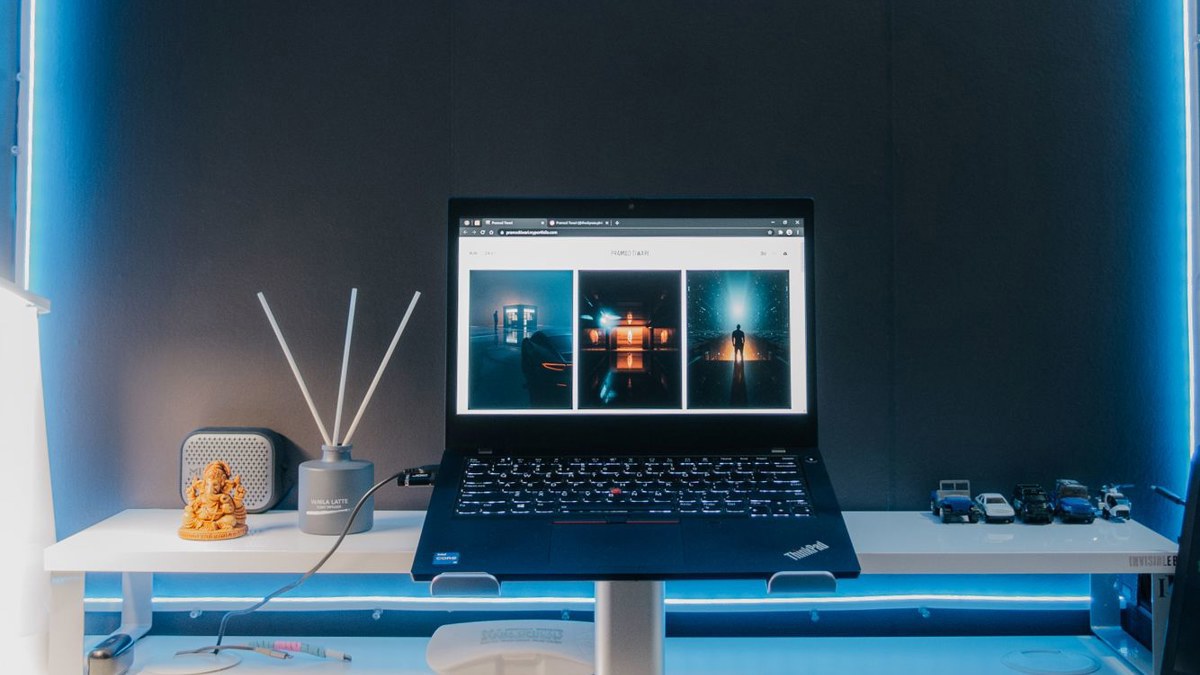
Surface Laptop Ultra review: RTX Spark makes a bold local AI pitch, with first-gen risk
Surface Laptop Ultra brings RTX Spark to a premium Windows laptop, but local AI buyers should wait for independent tests.


Microsoft's Surface Laptop Ultra is not a normal premium laptop refresh. The October 7 preorder launch turns NVIDIA's RTX Spark platform into a shipping Surface product, with Microsoft positioning the machine for local AI, 3D work, development and high-end creative workloads. That makes it interesting, but also unusually hard to buy on faith: the strongest claims are platform claims, while independent battery life, thermals and sustained workload testing still need to arrive after retail units ship.
What It Is
Microsoft says Surface Laptop Ultra combines an NVIDIA Blackwell RTX GPU, an NVIDIA Grace CPU, and up to 128 GB of unified memory in a laptop under 4.5 pounds and under 18 mm thick. The company lists a starting price of $2,599.99 and preorder availability ahead of an October 16 release. NVIDIA frames RTX Spark as a Windows platform for local AI agents, creative workloads and larger on-device models, rather than simply another gaming GPU option.
That framing is the main reason to care. A conventional creator laptop can already edit video, compile code and play games. Surface Laptop Ultra is trying to make a different promise: a portable Windows machine with CUDA support, a large unified memory ceiling and enough AI compute for local model workflows that would usually push users toward a desktop, cloud instance or Apple silicon workstation.
Where It Looks Strong
- The unified memory ceiling is the headline feature for developers experimenting with local LLMs, multimodal models or agent workflows.
- Microsoft's Surface design, display, camera and input reputation give the RTX Spark concept a polished first host instead of a bare developer box.
- CUDA support matters for AI builders who already depend on NVIDIA software stacks and do not want to port every workflow.
The buyer case is strongest for a specific group: AI developers, technical creators and researchers who need local experimentation more than the lowest possible performance per dollar. For that audience, a laptop that can run bigger models locally while still behaving like a premium Windows machine could be more convenient than juggling a thin laptop plus a separate workstation.
The Caveats
The weak point is proof. Microsoft cites up to one petaflop of AI performance and model-size claims, but those are vendor figures. They do not answer the questions that decide whether this is a great mobile workstation or an expensive showcase: how loud it gets, how long it sustains heavy GPU loads, how fast the entry configuration is, and what battery life looks like when local AI work replaces ordinary browsing.
The starting configuration also needs scrutiny. Independent launch coverage reports that the $2,599 entry model uses 24 GB of unified memory and 512 GB of storage, which may be tight for the very local AI and creator workloads Microsoft is using to sell the machine. Buyers drawn to the 128 GB ceiling may be shopping much higher up the configuration ladder.
Against The Alternative
Compared with a MacBook Pro, Surface Laptop Ultra's obvious advantage is the Windows plus NVIDIA software path: CUDA, RTX tooling and closer alignment with many AI developer workflows. Apple's counter is maturity. MacBook Pro buyers already have years of independent testing around battery life, thermals and creative performance. Microsoft's machine may be more flexible for NVIDIA-centered AI work, but it has more launch-week uncertainty.
The better comparison for some buyers may be Surface RTX Spark Dev Box or another RTX Spark laptop. If portability is optional, a desk system could make more sense for sustained local inference. If portability is essential, shoppers should still wait for independent reviews before assuming the Ultra can behave like a quiet everyday laptop and a compact AI workstation at the same time.
Verdict
Surface Laptop Ultra is a promising but conditional buy. It earns attention because it packages RTX Spark in a real premium Surface, not because Microsoft has already proved it beats established workstations. Preorder only if local NVIDIA AI work is central to your day and you can tolerate first-generation uncertainty. Everyone else should wait for full reviews.
Sources
Cover photo by Pramod Tiwari on Pexels, used under the Pexels License.
What supports the decision
Pros
- RTX Spark brings CUDA-focused local AI workflows into a portable Surface design.
- Up to 128 GB of unified memory supports larger local model and creator workloads.
- Premium Surface hardware gives the new AI platform a polished Windows laptop host.
- October 16 availability gives buyers a near-term path instead of a distant concept device.
Cons
- Key performance, battery and thermal claims still need independent retail testing.
- The $2,599 entry configuration may be tight for serious local AI workloads.
- First-generation RTX Spark laptops carry ecosystem and support-risk questions.
- Buyers who do not need CUDA may find better-proven MacBook Pro alternatives.
Key Specs





Comments (0)
Leave a Comment