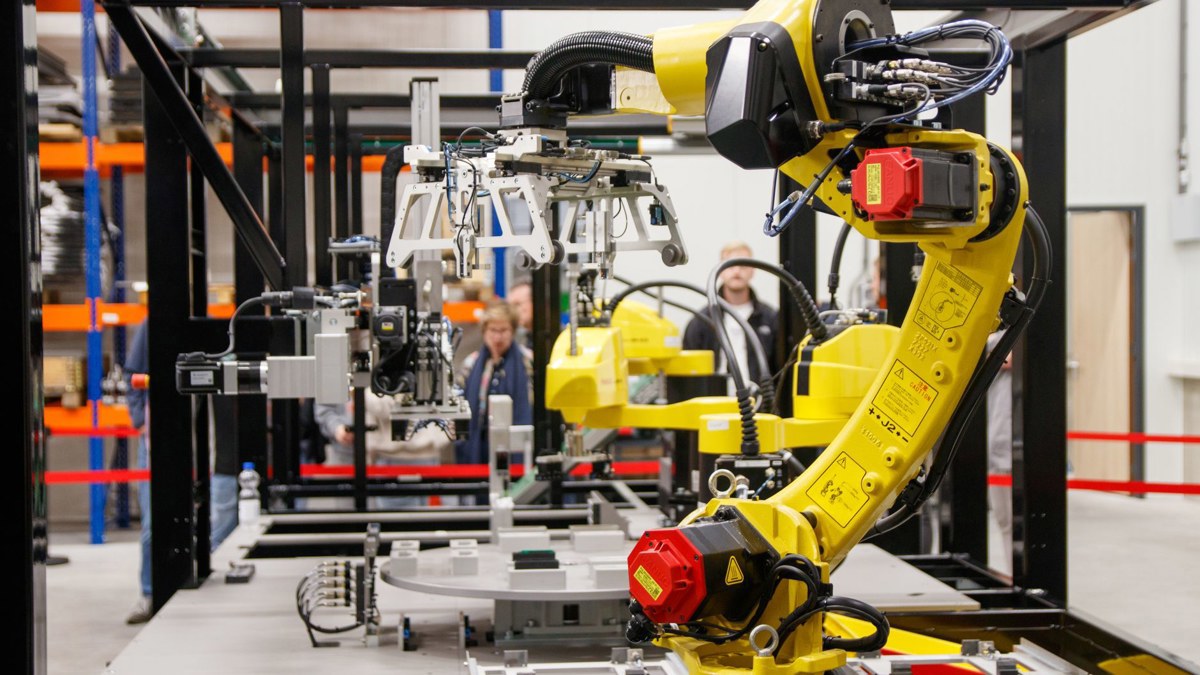
MIT's VLASH method helps robot AI plan while moving instead of pausing between actions
MIT's VLASH robotics method lets AI plan from a robot's predicted future state, cutting reaction latency and smoothing motion.


MIT researchers have detailed a robotics technique called VLASH that is designed to make vision-language-action models react faster in real time. The July 28 MIT News report says the method lets a robot estimate its future position while it is still executing the current motion, so the AI system can begin planning the next motion before the robot comes to a stop.
The work targets a practical bottleneck in modern physical AI. Vision-language-action models can translate camera observations and task instructions into chunks of robot movement, but inference can be slow enough that the machine pauses between chunks. Those pauses make motion look jerky and limit tasks that require quick reactions, such as sorting moving objects, table tennis, or emergency-response maneuvers.
Why Future State Matters
VLASH approaches the problem by conditioning the model on an estimated execution-time state rather than only on the robot's current state at the start of inference. MIT says this future-state-aware planning reduces the mismatch between where the robot was when it began thinking and where it will be when the next action is applied. The researchers report that the technique adds no computational overhead to the planning process and can be used across varied robotic hardware.
In MIT's summary, the method doubled robot speed on activities such as pick-and-place tasks while cutting lag between motions. The related paper reports that VLASH reduced reaction latency by up to 11.8 times against synchronous inference, and with action quantization reached 1.5 to 2.0 times faster task completion with minimal accuracy loss. MIT also notes a color-sorting cube task where VLASH placed objects twice as fast as baseline methods while matching the best baseline's 90 percent accuracy.
What Comes Next
The development is still research, not a commercial robot product. That distinction matters: the results show a promising route for making AI-controlled robots smoother and more responsive, but deployments will still depend on hardware, training data, safety controls, and how well the method generalizes outside lab tasks.
The researchers say they want to combine VLASH with more capable world models that can forecast future observations of a robot's environment. If that direction holds up, future robot systems could spend less time waiting for model inference and more time acting continuously in changing physical spaces.
Sources
Cover photo by Freek Wolsink on Pexels, used under the Pexels License.




Comments (0)
Leave a Comment