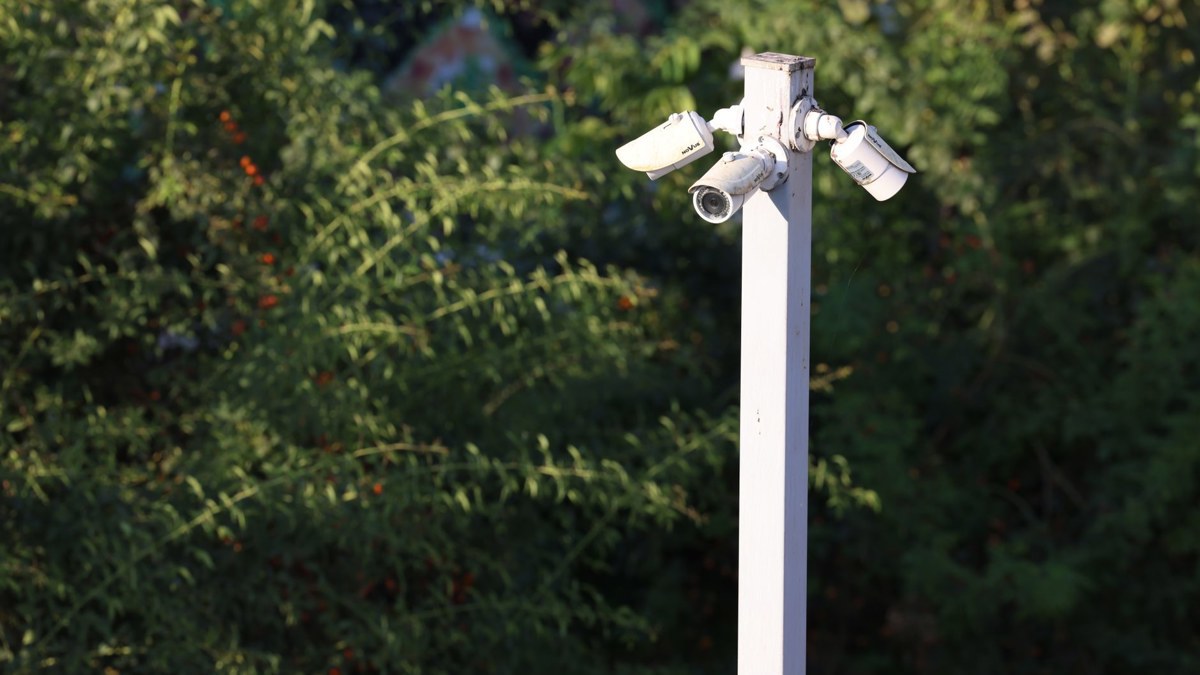
Security researcher demos adversarial pattern that can fool some surveillance camera detection
A Def Con demo showed noRecognition adversarial patterns can confuse some surveillance camera detection models.


A security researcher has publicly demonstrated an adversarial pattern designed to make some automated surveillance systems fail at the detection step, according to TechCrunch reporting from Def Con in Las Vegas. The project, called noRecognition, does not stop cameras from recording video. Instead, it targets the computer vision models that decide whether a person, face, vehicle or other object should be flagged for automated analysis.
Researcher Bill Swearingen told TechCrunch that he spent roughly a year building and testing computer-generated patterns, running about 31 million tests as the system searched for designs that could confuse multiple detection algorithms at once. The work uses reinforcement learning to iterate on visual patterns, then scores whether common detection models still identify the covered subject.
Why it matters
The demonstration is a practical reminder that camera networks increasingly depend on software judgments, not just raw video. License plate readers, body cameras and facial recognition pipelines often begin by detecting whether a relevant object is present in a frame. If that first step fails, downstream identification or alerting may never happen, even though a human reviewing the footage could still see what was recorded.
TechCrunch reported that Swearingen's first public real-world test happened Friday at Def Con, where a pattern printed on a vehicle was used against a surveillance camera setup. The report says the test showed the approach could work outside a lab, while also noting that the patterns do not provide invisibility and can be countered if vendors learn the exact designs.
Limits and open questions
- The research appears to affect detection confidence rather than the camera's ability to capture footage.
- Results can vary by camera, model, viewing angle, lighting, print quality and how much of the subject the pattern covers.
- Camera vendors may retrain systems once specific adversarial designs become known.
- The same technique raises policy questions because it could be framed as privacy protection, surveillance resistance or an evasion tool depending on context.
For now, the stronger takeaway is not that any single printed design defeats surveillance broadly. It is that physical-world adversarial attacks are moving from academic examples and lab demos into public tests against systems that cities, companies and law enforcement already use. That makes model robustness, transparent testing and governance around automated camera networks more urgent than treating computer vision alerts as neutral facts.
Sources
Cover photo by Xayriddin Baxromxo'jayev on Pexels, used under the Pexels License.






Comments (0)
Leave a Comment