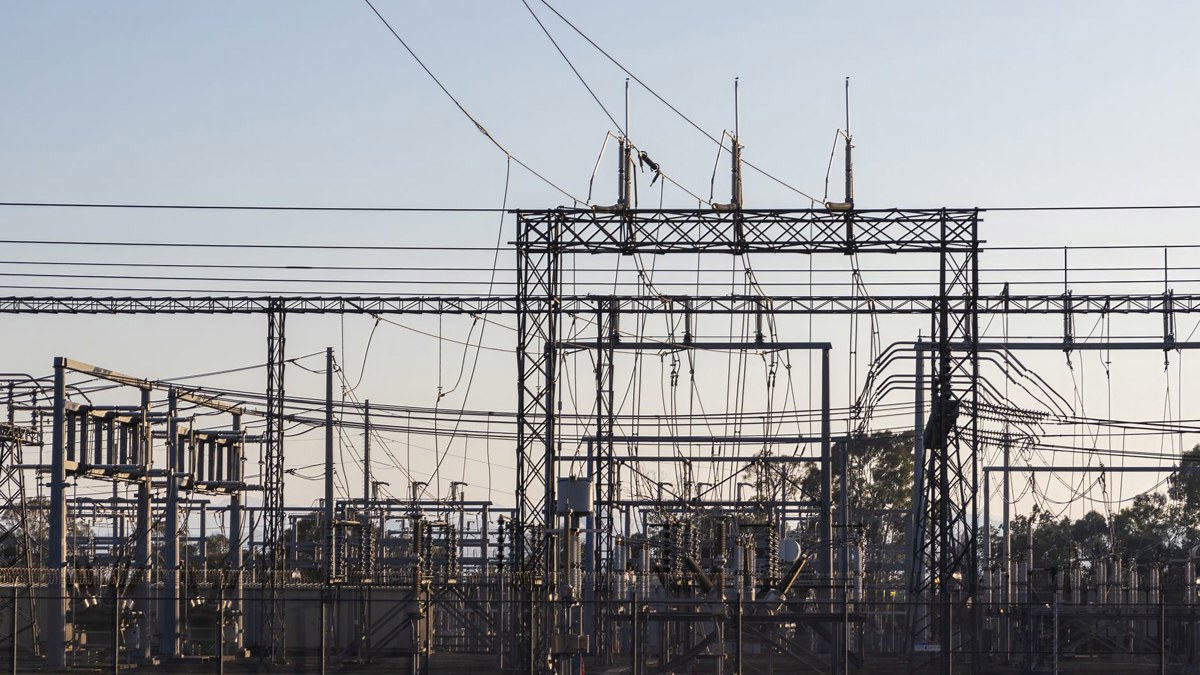
Northern Virginia data centers dropped more than 3 GW from PJM after line fault
A Northern Virginia line fault showed how concentrated AI data centers can rapidly reshape grid demand.


A transmission fault in Ashburn, Virginia, has turned into a fresh warning about how concentrated AI infrastructure can behave on the electric grid. Data Center Knowledge reported on July 23 that hyperscale data centers in Northern Virginia automatically transferred to backup power after a Dominion Energy transmission line fault, causing more than 3 gigawatts of demand to disappear from PJM's system in seconds.
The event did not produce a blackout, and Dominion said normal operations were restored within minutes. But the scale matters: Data Center Knowledge, citing PJM via Reuters, said the drop represented about 3% of system demand at the time. TechCrunch later reported that PJM data showed about 3.1 GW vanishing in roughly 30 seconds, with excess power peaking at 3.49 GW before the system stabilized about 11 minutes later.
Why It Matters
Electric grids are designed around balance. Operators routinely plan for the sudden loss of large power plants, but this incident shows that large customer loads can also move as a coordinated system event when many facilities use similar protection settings. In this case, the reported sequence was not a utility-directed load shed. Dominion told Data Center Knowledge that the data centers' own control systems chose to transfer load off the grid for a short period after the fault.
Northern Virginia is a uniquely important test case because it hosts the world's densest data center market. Loudoun County alone has more than 200 completed data centers and dozens more under construction, according to county economic development figures cited by Data Center Knowledge. That concentration means a local transmission disturbance can interact with thousands of megawatts of computing, cooling and power-conversion equipment at once.
Planning Questions
- Grid operators may need better real-time visibility into how much data center load has moved behind the meter during disturbances.
- Large campuses may face pressure to prove they can ride through voltage or frequency events instead of disconnecting together.
- Reconnection timing could become as important as disconnection timing if several gigawatts try to return too quickly.
The incident also arrives as AI training and inference are pushing data center growth into mainstream energy planning. TechCrunch noted that the Northern Virginia episode echoed a 2024 PJM disturbance that involved roughly 1.5 GW of load. This week's larger reported drop suggests the operational footprint of AI-scale campuses is growing quickly enough that grid rules, utility planning and data center engineering will have to evolve together.
Sources
Cover photo by Robert So on Pexels, used under the Pexels License.







Comments (0)
Leave a Comment